Worldwide Delivery Partner DHL
Previous
Previous Product Image

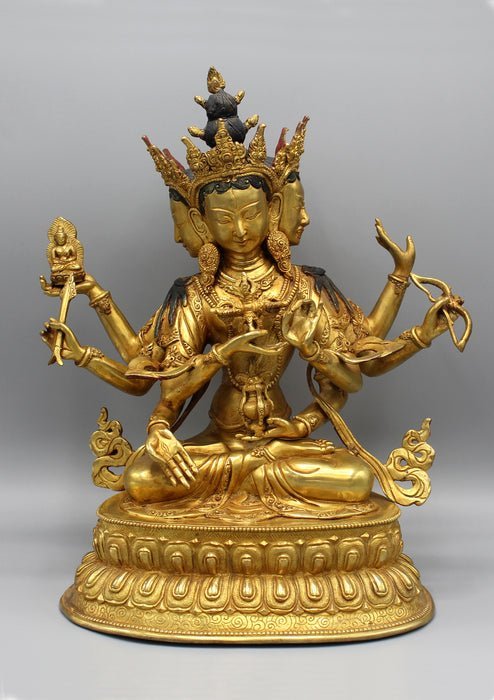
Tibetan Buddhist Namgyalma Gold Plated Statue

$ 2,275.00
Next

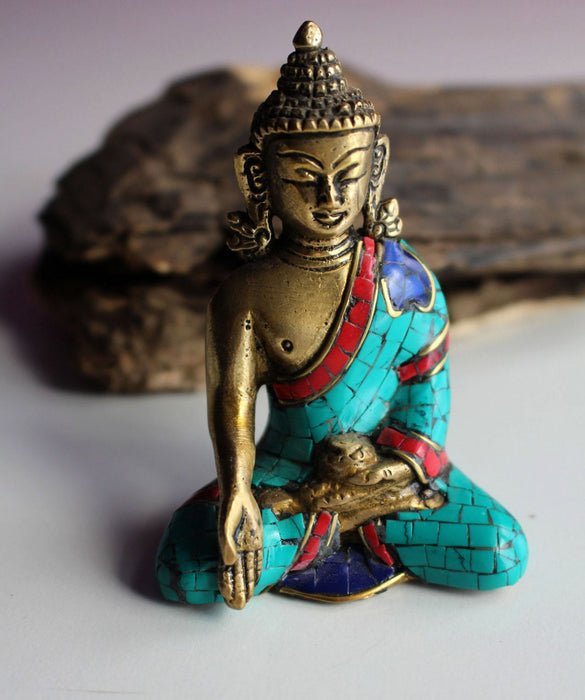
Ratnasambhva Buddha Statue Adorning A Majestic Robe 3″

$ 49.90
Next Product Image

Copper Five Dhyani Buddhas with Silver Robe Statue, Panchha Buddha Statue

$ 260.00

This is a Copper Statue of five dhyaani Buddhas. The artist who made this statue is a forth generation statue maker and is a master craftsman. The craftsmanship on this statue is top notch and one can see the finest details of work on it. The statue has fine carving with silver robe.

The Five Dhyani Buddhas are icons of Mahayana Buddhism. The five Buddhas are Aksobhya, Amitabha, Amoghasiddhi, Ratnasa?bhava, and Vairocana. Each represents a different aspect of enlightened consciousness to aid in spiritual transformation.

1. Aksobhya Buddha

Akshobhya was a monk who vowed never to feel anger or disgust toward another being. He was immovable in keeping this vow. After striving for a long period, he became a Buddha. In his left hand, Akshobhya holds a vajra, the symbol of shunyata — an absolute reality that is all things and beings, unmanifested. Akshobhya is also associated with the fifth skandha, consciousness.

2. Amitabha Budhha

Amitabha Buddha, who is also called Amita or Amida Buddha, is probably the best known of the Dhyani Buddhas. In particular, devotion to Amitabha is at the center of Pure Land Buddhism, one of the largest schools of Mahayana Buddhism in Asia. Amitabha’s hands are most often in a meditation mudra: fingers barely touching and gently folded over the lap with palms facing upward.

3. Amoghasiddhi Buddha

Amoghasiddhi Buddha appears to represent the accomplishment of all action. His name means ‘Infalliable Success” and his consort is the well-known Green Tara, in the ‘Noble Deliverer.’ He holds a crossed vajra, also called a double dorje or the thunderbolt. This represents accomplishment and fulfillment in all directions.

4. Ratnasa?bhava Buddha

Ratnasambhava Buddha represents richness. His name translates to “Origin of Jewel” or the “Jewel-Born One.” He holds his hands in the wish-fulfilling mudra: his right hand facing down and the palm outward and his left in the mudra of meditation. This symbolizes generosity.

5. Vairocana Buddha

Vairocana Buddha is sometimes called the primordial Buddha or Supreme Buddha. He is thought to be the embodiment of all the Dhyani Buddhas; also everything and everywhere, omnipresent and omniscient. His hand gesture is known as the Dharmachakra mudra and is often reserved for the iconography of either Vairocana or the historical Buddha, Shakyamuni. The mudra represents the turning of the wheel and places the hands so that the thumbs and index fingers touch at the tips to form a wheel.

Size of each Statue : 3.2″ H x 2.1″ W x 1.6″ D

Total Weight : 740 grams approx
Add to Wishlist
Add to Wishlist
SKU: SKU BST387Setof5 Categories: , ,

Description

This is a Copper Statue of five dhyaani Buddhas. The artist who made this statue is a forth generation statue maker and is a master craftsman. The craftsmanship on this statue is top notch and one can see the finest details of work on it. The statue has fine carving with silver robe.

The Five Dhyani Buddhas are icons of Mahayana Buddhism. The five Buddhas are Aksobhya, Amitabha, Amoghasiddhi, Ratnasa?bhava, and Vairocana. Each represents a different aspect of enlightened consciousness to aid in spiritual transformation.

1. Aksobhya Buddha

Akshobhya was a monk who vowed never to feel anger or disgust toward another being. He was immovable in keeping this vow. After striving for a long period, he became a Buddha. In his left hand, Akshobhya holds a vajra, the symbol of shunyata — an absolute reality that is all things and beings, unmanifested. Akshobhya is also associated with the fifth skandha, consciousness.

2. Amitabha Budhha

Amitabha Buddha, who is also called Amita or Amida Buddha, is probably the best known of the Dhyani Buddhas. In particular, devotion to Amitabha is at the center of Pure Land Buddhism, one of the largest schools of Mahayana Buddhism in Asia. Amitabha’s hands are most often in a meditation mudra: fingers barely touching and gently folded over the lap with palms facing upward.

3. Amoghasiddhi Buddha

Amoghasiddhi Buddha appears to represent the accomplishment of all action. His name means ‘Infalliable Success” and his consort is the well-known Green Tara, in the ‘Noble Deliverer.’ He holds a crossed vajra, also called a double dorje or the thunderbolt. This represents accomplishment and fulfillment in all directions.

4. Ratnasa?bhava Buddha

Ratnasambhava Buddha represents richness. His name translates to “Origin of Jewel” or the “Jewel-Born One.” He holds his hands in the wish-fulfilling mudra: his right hand facing down and the palm outward and his left in the mudra of meditation. This symbolizes generosity.

5. Vairocana Buddha

Vairocana Buddha is sometimes called the primordial Buddha or Supreme Buddha. He is thought to be the embodiment of all the Dhyani Buddhas; also everything and everywhere, omnipresent and omniscient. His hand gesture is known as the Dharmachakra mudra and is often reserved for the iconography of either Vairocana or the historical Buddha, Shakyamuni. The mudra represents the turning of the wheel and places the hands so that the thumbs and index fingers touch at the tips to form a wheel.

Size of each Statue : 3.2″ H x 2.1″ W x 1.6″ D

Total Weight : 740 grams approx

Reviews

There are no reviews yet.

Be the first to review “Copper Five Dhyani Buddhas with Silver Robe Statue, Panchha Buddha Statue”

Your email address will not be published. Required fields are marked *